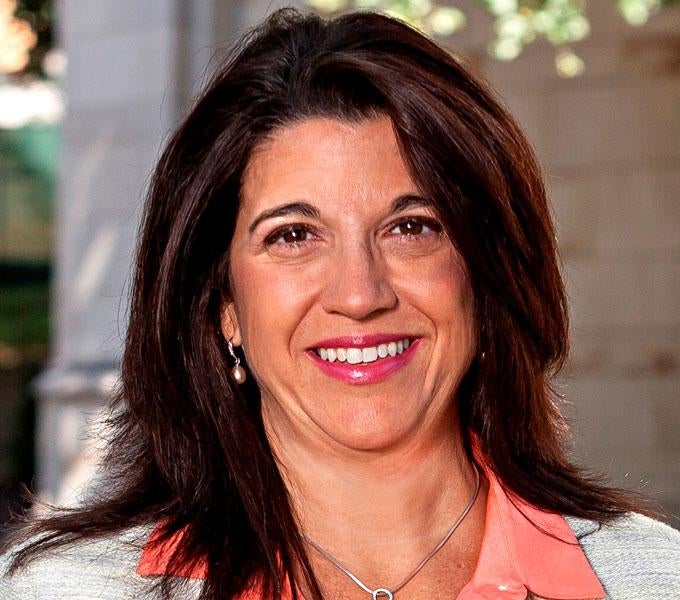
Professor Mary Ohmer received her Ph.D. with distinction from the University of Pittsburgh, School of Social Work. She also received her MSW and MPIA from the University of Pittsburgh, and her BSW from Gannon University in Erie, PA. Prior to her PhD, Dr. Ohmer worked for 15 years in community organizing and development throughout the United States, including Pittsburgh. Dr. Ohmer conducts collaborative community engaged research focused on community change and development, advocacy and organizing and community and youth violence prevention. Her research has been funded by the Substance Abuse and Mental Health Services Administration, the Centers for Disease Control and Prevention and AmeriCorps Office of Research and Evaluation.
Dr. Ohmer has also worked internationally, presenting at conferences in Tokyo, Japan and Hong Kong, China, conducting research for an NGO in Ghana, teaching for a study abroad program in Cuba and directing a study abroad program in Costa Rica focused on health, social justice, and sustainability.
Dr. Ohmer has served the social work profession in multiple roles, including as Vice President and 2025 Conference Chair for the Society for Social Work and Research (SSWR), and currently as Co-Creator and Co-Chair of SSWR’s Task Force on Safeguarding Social Work Research and the Community and Neighborhood Research Cluster, and member of the SSWR Fund Development Committee. She has also served on the board of the Association for Community Organization and Social Action, helped to create their national Community Organizing Certificate and is currently an Editor for their Journal of Community Practice. She is the Academic Co-Lead for the Policy and Place Committee for The Pittsburgh Study (UPMC, Children’s Hospital of Pittsburgh), on the Internal Advisory Council for Pitt’s Community Engagement Center Initiative and Chair of the COSA MSW Specialization in the School of Social Work. Dr. Ohmer was the lead author of Measures for Community and Neighborhood Research, Co-Editor and an author for the Handbook of Community Practice, 2nd Edition and served on the leadership team and was a contributing author to the Council on Social Work Education’s Specialized Practice Curricular Guide for Macro Social Work Practice.
Accepting Graduate Students: Yes
Awards
- University of Pittsburgh, Faculty Honors Convocation, Election to Society for Social Work & Research Board
- University of Pittsburgh, Senior Vice Chancellor for Engagement’s Partnerships of Distinction Award (Ohmer, M., Tharp-Gilliam, S., Pearl, D. & Micire, M.). Research for Equity and Power.
- Fellow, Society for Social Work and Research
- Emerging Scholar Award, Association for Community Organization and Social Administration
Selected Publications
Ohmer, M.L., Jacobs, L.A., Beery, J., Fabio, A., Falk, K., Gazarik, I., Gomez, C., Joiner, T., Miller, E., Neumann, A., Oliver, A., Reilly, R., Shedeed, M.R., Zeiner, A., & Culyba, A.J. (2026). A Collective Efficacy Intervention to promote community resiliency: Rationale for and design of a quasi-experimental evaluation. JMIR Research Protocols, 15.
Ortiz-Whittingham, L.R., Scott, S., Jacobs, L.A., Culyba, A.J., Cruce, A., Reilly, R., Ohmer, M., Wang, C., Giankas, J. Miller, E., & Fabio, A. (2025). Characterizing resilient and at-risk neighborhoods with lower- and higher-than expected firearm injuries and fatalities in Pittsburgh, Pennsylvania. Injury Prevention, 32(3), 510-513.
Ohmer, M.L., Neumann, A., Jacobs, L., Beery, J., DeMars, K., & Miller, E. (2025). Advancing Data Justice: Lessons from a Collective Efficacy Violence Prevention Intervention. Journal of Society for Social Work and Research, Special Issue: Research Methods to Elevate the Study of Race and Antiracism in Social Work, 16(3), 621-653.
Li, K., Tang, F., Albert, S., Rauktis, M. & Ohmer, M. (2024). Social Isolation, Loneliness, and Depressive Symptoms among Older Adults: The Moderating Effect of Resilience. The Gerontologist, 64(7), gnae056. https://doi.org/10.1093/geront/gnae056
Davis, B., Foster, K., Pitner, R., Wooten, N. & Ohmer, M. (2024). Innovating Methodologies for Examining Gentrification-Induced Social and Cultural Displacement: An Illustration of Integrating Photovoice into Story Map. Urban Affairs Review, 60(1), 367-386.
Journal of Community Practice, 31(3-4), 255–265
Biernesser, C., Ohmer, M., Mann, E., Nelson, L., Farzan, R., Schwanke, B., & Radovic, A. (2023). Middle School Students’ Experiences with Cyberbullying and Perspectives Toward Prevention and Bystander Intervention in Schools. Journal of School Violence, 22(3), 339-352.
Ohmer, M.L., Finkelstein, C., Durham, A., Melnick, A., & Dostilio, L. (2022). University-Community Engagement during a Pandemic: Moving Beyond “Helping” to Public Problem Solving. Metropolitan Universities Journal, COVID19-Innovations Through Crisis, 33(1), 81-91.
Thurber, A., Krings, A., Sprague-Martinez, L., & Ohmer, M.L. (2021). Resisting gentrification: The theoretical and practice contributions of social work. Journal of Social Work, 21(1), 26-45.
Ohmer, M.L., Booth, J., & Farzan, R. (2021). R U connected? Engaging youth in designing a mobile application for facilitating community organizing and engagement. Journal of Community Practice, Special Issue on Digital Organizing, 29(3), 257-279.
Ohmer, M.L. (2020). Youth-Adult Partnerships to Prevent Violence. Journal of Intergenerational Relationships, 20(1), 105-126.
Ohmer, M. L., Davis, K.L., Eveleth, J.R., Ford, T.R., Green, A.F., Hershey, S.M., Hoffman, K., Micire, M., Webb, C., &Williams, S.J. (2020). Engaging in Genuine Research Partnerships with the Homewood Community: Results from Interviews and Focus Groups with Homewood and Pitt Stakeholders (pp.1-14, Rep.). Pittsburgh, PA: University of Pittsburgh Community Engagement Centers.
Dostilio, L. D., Ohmer, M. L., McFadden, K., Mathew, S., & Finkelstein, C. (2019). Benchmarking How Urban and Metropolitan Higher Education Builds Community Capacity through Place-based, Hyperlocal Engagements. (pp. 1–41). Towson, MD: Coalition of Urban and Metropolitan Universities.
Ohmer, M.L., Coulton, C., Freedman, D., Sobeck, J. & Booth, J. (2019). Measures for Community and Neighborhood Research. Thousand Oaks, CA: Sage Publications, Inc.
Ohmer, M.L. (2019). Citizen participation in neighborhood organizations and its relationship to volunteers’ self- and collective efficacy and sense of community, in T. Bent-Goodley, J.H. Williams, M.L. Teasley, and S.H. Gorin, (Editors), Grand Challenges for Society: Evidence-Based Social Work Practice. Washington, DC: NASW Press. (Invited)
Thurber, A,, Krings, A., Martinez, L.S., & Ohmer, M. (2019). Resisting Gentrification: The Theoretical and Practice Contributions of Social Work. Journal of Social Work, 0(0), 1-20. Ohmer, M.L., Coulton, C., Freedman, D., Sobeck, J. & Booth, J. (2019). Measures for Community and Neighborhood Research. Thousand Oaks, CA: Sage Publications, Inc.
Weil, M., Reisch, M., & Ohmer, M.L. (Editors) (2012). The Handbook of Community Practice, 2nd edition. Sage Publications, Inc.
Ohmer, M. L. & DeMasi, K. (2009). Consensus organizing: A community development workbook: A comprehensive guide to designing, implementing, and evaluating community change initiatives. Sage Publications, Inc.
Research Interests
- Community organizing and Advocacy
- Community and Youth Violence prevention
- Community Change
- Equitable Development
- Community based participatory research
- Community Engagement
Research Areas and Grants
Dr. Ohmer’s community engaged and participatory research areas include civic engagement and participation, intervention research focused on facilitating community capacity to address substantive neighborhood problems including community change, equity and violence prevention. Her community intervention research is conducted in collaboration with community based partners and residents, and through interdisciplinary research teams. Most notably, she developed an intervention to facilitate collective efficacy among youth and adult residents for the prevention of youth and community violence and fostering community wellbeing that was funded by the Substance Abuse and Mental Health Services Administration and conduced in 10 communities impacted by high levels of violence in Allegheny County. She also received a grant from the Centers for Disease Control and Prevention in collaboration with the Pitt Department of Adolescent Medicine to conduct a comparison trial of this intervention, comparing it with health sessions that were conducted in 10 comparison neighborhoods.
Dr. Ohmer’s county wide work with community partners Equitable and Just Greater Pittsburgh and Age Friendly Greater Pittsburgh focuses on increasing civic engagement through training residents from throughout the county in advocacy and organizing and working with them to develop and implement an advocacy project on a cross cutting community issue. This work is funded by the AmeriCorps Office of Research and Evaluation. Dr. Ohmer received her third national research award from AmeriCorps to expand this county wide research, in collaboration with her current community partners, Dr. Suzanne Pritzker from Pitt and Dr. Samantha Teixeria from Boston College, who is also a graduate of our Social Work Doctoral Program.
A Community-Centered Collective Efficacy Intervention for Prevention of Community Violence. Centers for Disease Control and Prevention, National Center for Injury Prevention, U-01: Rigorous Evaluation of Community-Centered Approaches for the Prevention of Community Violence. (Miller, L. & Ohmer, M.L., Co-Principal Investigators; Jacobs, L., Culyba, A., Adebe, K., & Fabio, A., Co-Investigators). Cluster-randomized controlled trial to examine the effectiveness of an innovative community-centered Collective Efficacy Intervention that engages community partners and youth and adult residents to promote collective efficacy, thriving and resiliency to reduce community and youth violence in 10 intervention communities. This grant supports the implementation of health sessions in the 10 comparison communities, a rigorous evaluation and implementation science evaluation of the Collective Efficacy Intervention, including a fidelity and feedback assessment (Note: Dr. Ohmer developed and leads the Collective Efficacy Intervention).
Exploring Civic Engagement at Hyperlocal and Regional Levels. (2026 AmeriCorps National Service and Civic Engagement Research. (Ohmer, M.L., PI, Suzanne Pritzker, Co-PI; Beery J., Equitable and Just Greater Pittsburgh, Community Partner and Co-PI; Samantha Teixeira, Boston College, Academic Partner and Co-PI; Randi Vega, Age Friendly Greater Pittsburgh, Community Partner). This participatory study in under-resourced Allegheny County communities will compare short-term civic engagement projects addressing hyperlocal neighborhood issues with longer-term efforts addressing regional policy issues. Two intergenerational cohorts will participate in community planning, development, and policy-related activities, while researchers use surveys, focus groups, and observation to examine differences in participants’ experiences and outcomes. This project is guided by a Regional Steering Committee made up of local advocates, experts and community members working on community development and policy issues impacting communities in Allegheny County.
Research for Equity and Power: Resident Engagement and Advocacy for Equitable Development and Equity Policy Change. (2022 AmeriCorps National Service and Civic Engagement Research. (Ohmer, M.L., & Beery, J., Equitable and Just Greater Pittsburgh, Co-Principal Investigators; Randi Vega, Age Friendly Greater Pittsburgh, Community Partner). (9/30/2022 to 9/30/27). Guided by a Regional Steering Committee, this community partnered project implements and evaluated an Organizing and Advocacy Training program that engaged residents from across the City of Pittsburgh and Allegheny county. After the training participants identified a cross-cutting community equity issue they worked together to address though a hands-on Advocacy Project (Year 1 focused on housing eviction, tenant rights and healthy housing, Year 2 focused on Black mental health awareness and resources, and Year 3 focused on increasing access for youth to programs and resources). We are currently continuing work on the Year 3 youth advocacy project, and developing public and academic facing products and publications and civic engagement convenings to share the results of the project.
Community Thriving: Enhancing Resiliency of Communities after Stress and Trauma. U.S. Department of Health and Human Service, Substance Abuse and Mental Health Services Administration (SAMHSA), Center for Mental Health Services. (Martone, S., Ohmer, M., & Culyba, A., Co-Principal Investigators and Site Co-Leads) (Co-Investigator: Miller, L.). This project includes primary (Collective Efficacy Intervention), secondary (Youth Violence Prevention Programs) and tertiary prevention (Support for youth injured by violence) programs to serve marginalized and underserved communities in Allegheny County. Dr. Ohmer leads the implementation and evaluation of the Collective Efficacy Intervention with county wide partners, youth and adult residents and community partners and facilitators in 10 intervention communities and co-leads the Resiliency Project Steering Committee that guides the project.